The Story
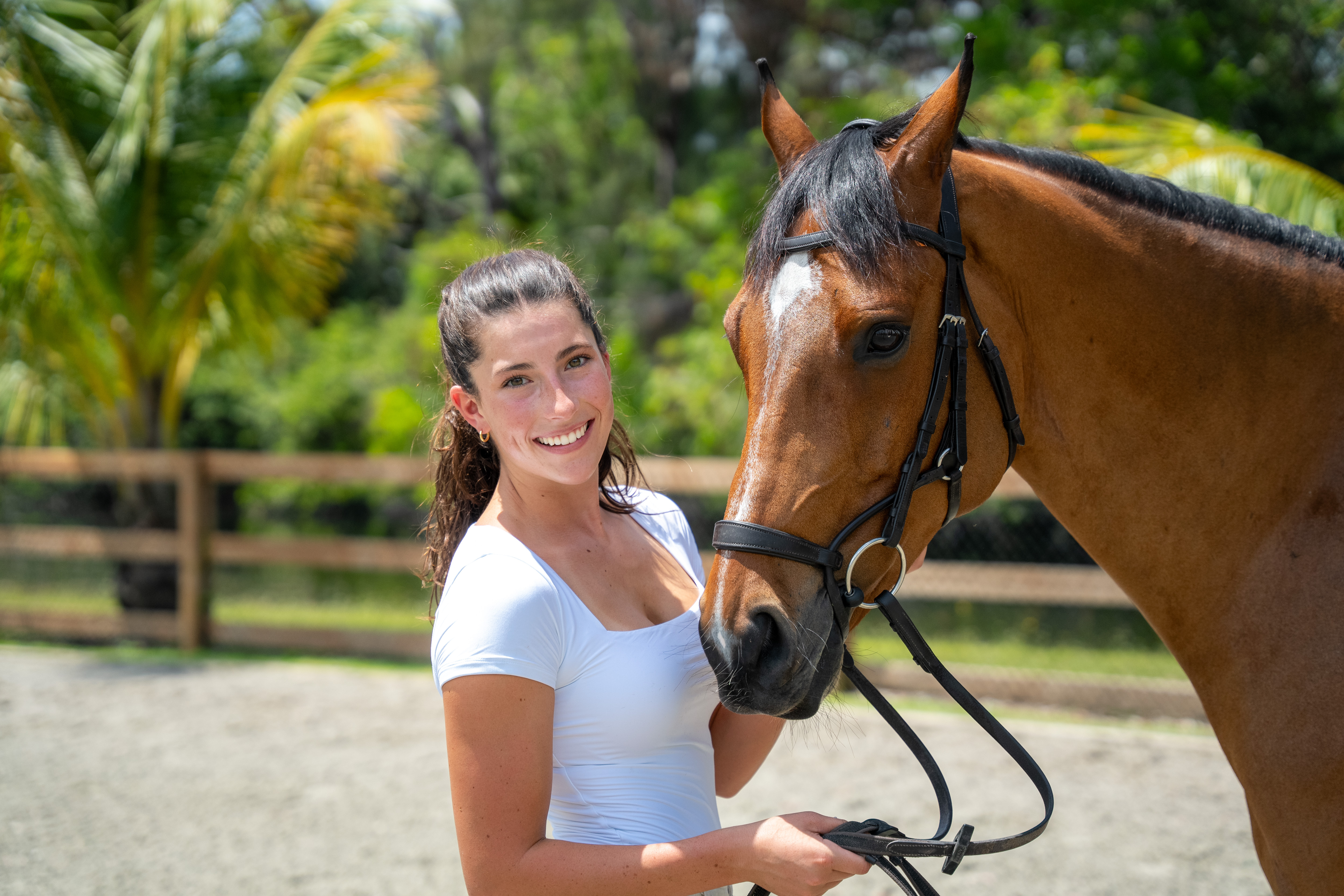
Alistair started In Hand the way most working photographers do, by shooting whatever needed shooting, and paying close attention to what she was drawn back to. What kept pulling her back was the barn. There's a particular kind of quiet in a barn at 6 am, before the day's lessons start, when a horse and the person who knows them best are just standing together enjoying the peaceful sounds of the barn. That's the picture worth chasing.
Wellington put her in the right place for it. Equestrian country means horses, riders, and the people around them aren't a niche subject; they're the whole community. In Hand grew out of spending real time in that world: learning how a barn actually runs, what a sales video needs to show a buyer, what a family wants to remember about a horse they've had since childhood. That eye isn't self-taught instinct alone, either; it's backed by three years building marketing and media programs for corporate brands, the kind of work where content has to actually perform, not just look nice. In Hand is that same discipline, aimed entirely at the world she grew up in.
Today In Hand splits its time between retainer partnerships with barns and equestrian businesses, and private sessions for riders and families. Different clients, same standard: show up, pay attention, and make something that still looks right in ten years.
There's a particular kind of quiet in a barn at 6 am, before the day's lessons start, when a horse and the person who knows them best are just standing together, enjoying the barn's peaceful sounds. That's the picture worth chasing.
Rider First
Long before there was a camera, there was a saddle; horse-crazy from five years old, in the irons on her first horse by ten, showing through her teens and into a training career in Wellington. That decade in the tack is still what the photography runs on.
15
Years in the tack, ground up
Chores to competing — starting with Primetime at ten.
3
Years in corporate media
Building marketing programs for brands before In Hand.
4
Knee surgeries
Never kept her out of the barn more than a few days.
Age five
Horse-crazy from the start. Riding lessons were the only thing she ever asked for, birthday after birthday.
Age ten
Primetime, and the deal that came with him: her parents said yes if she covered ten percent; the horse, the board, the showing. She'd been saving since eight.
The next six years
Chores, grooming, handling; learning the job from the ground up, plus a job with a local equine vet that sparked a real interest in horse care, not just riding. Two knee surgeries barely slowed her down; she was back on crutches in the barn within days, both times.
Age seventeen
Flew to Spain, came home with 5-year-old Don Julio, Theo to those who knew him. A genuinely successful summer season together, cut short by a third knee surgery. On her eighteenth birthday, she loaded up the truck and trailer and drove to Florida to reunite with him herself.
Wellington
Seasons training under Nelton Marcon; developing her young horse, picking up dressage. And one thing that never happened: a horse-show photo that captured what any of it actually felt like.
2025
Sold Theo as showing got harder to justify, and the story shifted into three years building marketing and media programs for corporate brands; the kind of work that teaches you what content actually has to do.
Today
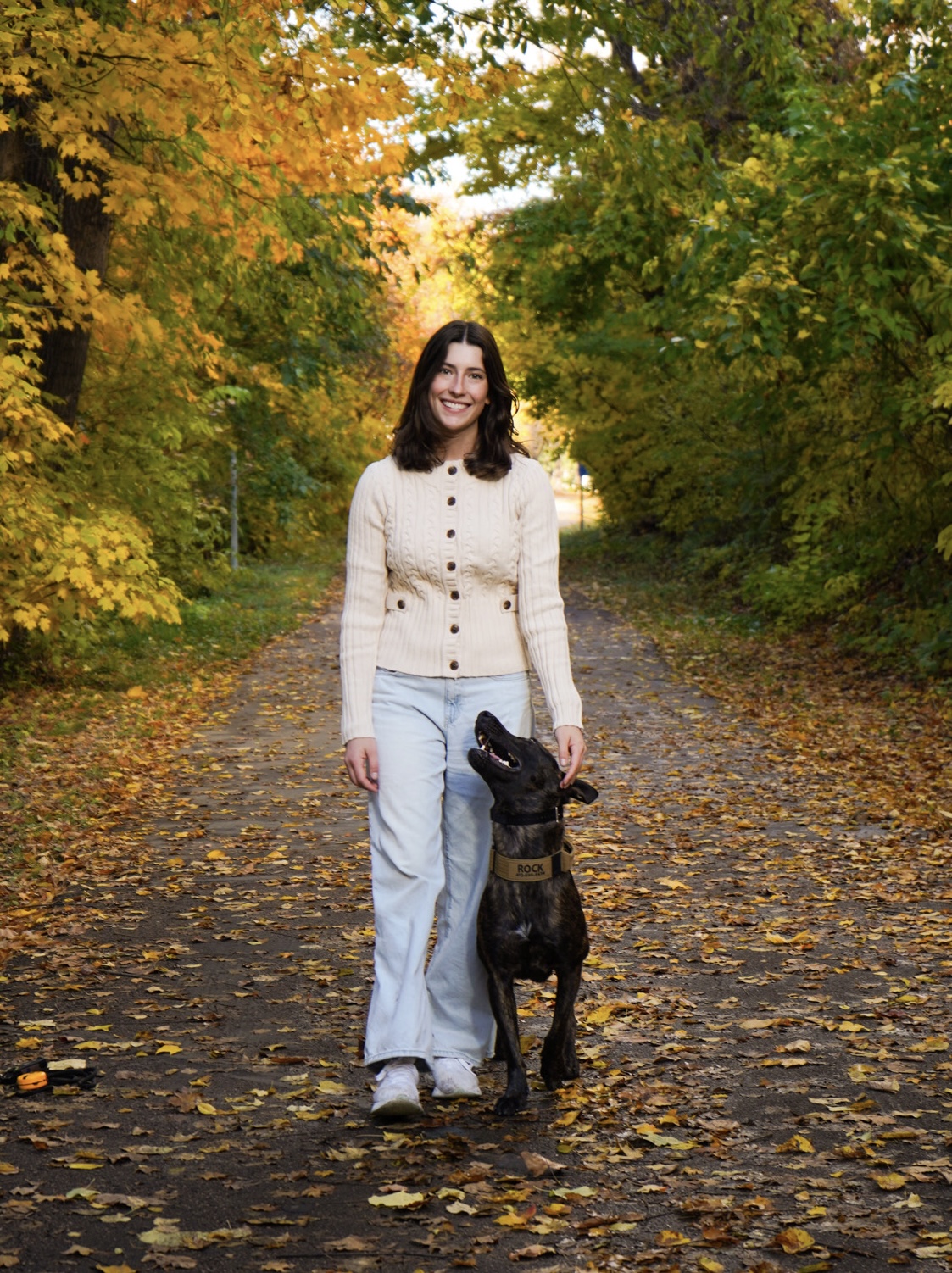
Two rescues, Rock and Archie, a Dutch Shepherd and a Belgian Malinois, and a camera that became her way back in. Rock's now a certified explosives-detection canine; Archie's still hunting for a job other than the freeloading one.
Gallery after gallery came back technically fine and empty, nothing that showed the real story between a horse and the person who loved them. That gap is what first put a camera in Alistair's hands.
That time in the tack isn't a footnote to the photography. It means she reads a warm-up ring instead of just watching it. She knows what a good distance to a fence looks like before the horse leaves the ground, feels the half-halt coming before a downward transition, and can call the exact stride a horse will land a flying change on, which is the difference between catching the moment and missing it by half a second. It's why sale videos out of In Hand actually show a horse's gaits honestly instead of the prettiest three seconds, why show coverage doesn't miss the round because nobody knew which horse was up next, and why a barn portrait never looks like it was directed by someone who's never sat on a horse.