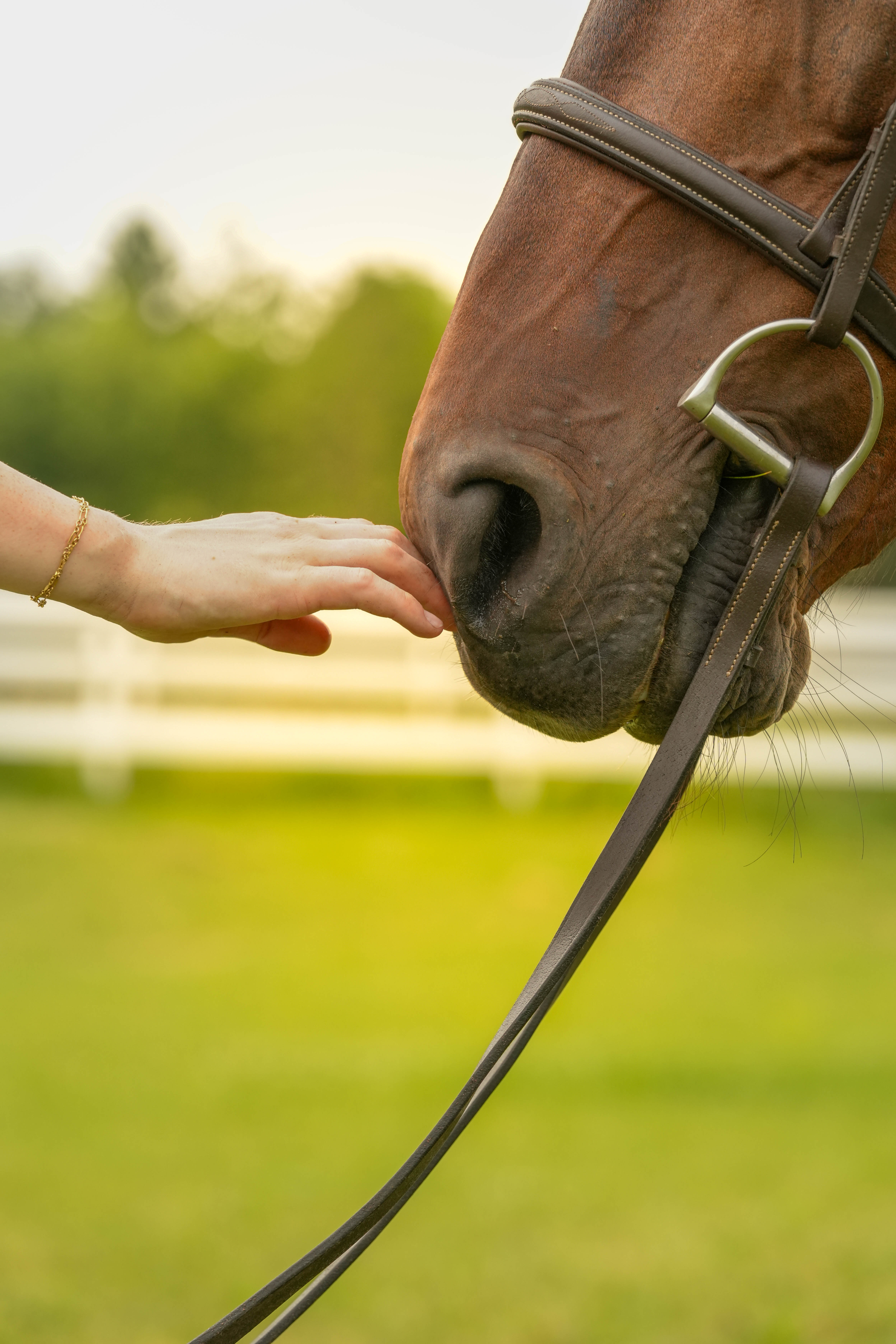
In the show ring, "in hand" describes a specific way of presenting a horse — led rather than ridden, on a simple lead rope, with nothing else between the handler and the animal. No tack, no distance, just the two of them and whatever trust they've built standing still in front of a judge. It's a plain, exposed way to show a horse. There's nowhere to hide a bad relationship, and there's nothing extra dressing up a good one.
That's the name, and it's turned out to be the whole approach in two words. Every choice in this studio gets measured against it. Does this add something true, or is it just decoration? A layout with too many competing elements isn't in hand — it's got tack on it. A caption written to sound clever instead of sounding like the client isn't in hand either. The standard is always the same: close, direct, and nothing extra between the camera and what's actually happening in front of it.
It also happens to describe the best kind of photograph. The ones that hold up aren't the heavily posed, heavily lit, heavily edited ones. They're the ones where a horse and the person who knows them best are just standing together, and the picture gets out of the way and lets that be enough.