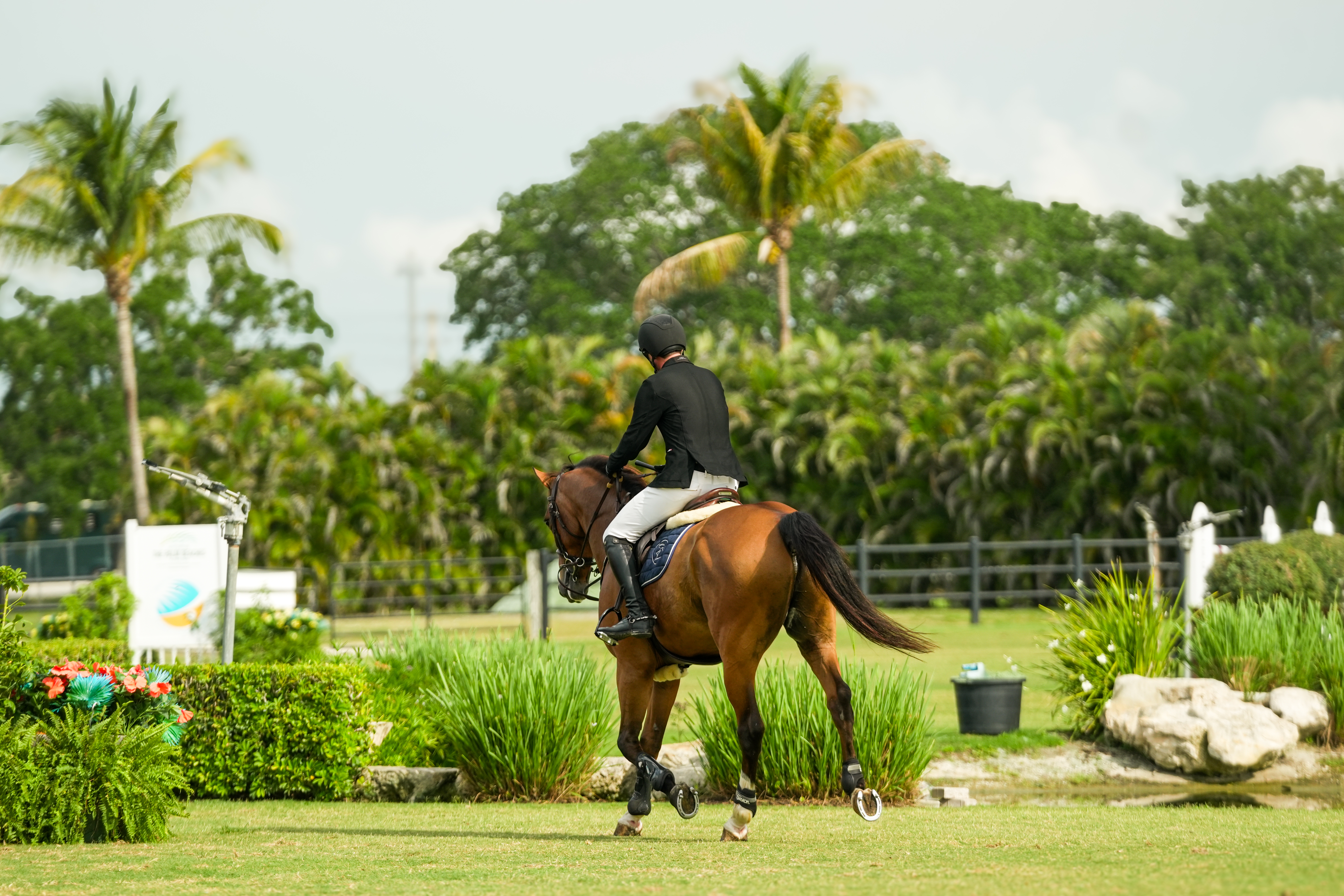
Every barn on the circuit knows the drill. A show photographer sets up ringside for the week, shoots hundreds of riders across a dozen rings, and a few days later sends a gallery link with three or four usable frames of your round — one angle, taken from wherever they happened to be standing when your number came up. If you're lucky, one of those has the horse's ears up and all four feet where you'd want them. You buy the one that's least bad, because it's the only proof you have that the trip happened at all.
That's not a knock on show photographers. It's just what the model produces. They're covering every ring, every division, every hour of the day, for hundreds of riders who are each a customer for about four seconds. A dedicated media partner works completely differently: instead of everyone competing for a stranger's split-second attention, one photographer is there specifically for your barn, your riders, your horses — for the whole day, not the four seconds your trip happened to take.
A show photographer is a vendor every family pays out of pocket, one photo at a time. A media partner is infrastructure the barn owns.
The gap between those two models shows up most clearly once you stop thinking about "photos" and start thinking about content. A single class-trip photo doesn't do anything for a barn's Instagram. A full show day of stills and video — warm-up, the nerves at the in-gate, the round itself, the hug coming out, hacking back to the barn at the end of the day — gives you weeks of material, and it gives every family in the program a real reason to say yes when their trainer asks if they want photos and video from the weekend.
This is where the business case actually lives, and it's worth saying plainly: visual content isn't a nice-to-have anymore, for a barn or for the business behind it.
of consumers say video content has directly helped them make a purchasing decision — and 78% of marketers report that video has measurably grown their sales.
Source: Lemonlight, 2026 Video Marketing StatisticsFor a barn, "purchasing decision" means a family deciding whether to trial-lesson with your program instead of the one down the road. It means a junior rider requesting you by name because they've been following your Instagram all season. It means an owner scrolling three or four barns' pages before ever picking up the phone to ask about a training spot for the winter. People are researching barns visually before they ever make contact — the same way they research anything else they're about to spend real money on.
Short-form video does even more of that work than photos alone. Reels and similar vertical video formats consistently outperform static posts by a wide margin:
average likes on an Instagram Reel compared to a standard photo post — and roughly 91 shares versus just 17.
Source: Sprout Social, Social Media Video Statistics 2026That gap compounds. A share is a barn's marketing budget being spent by someone else, for free, because the content was good enough to pass along. A single ribbon photo doesn't leave the family who bought it. A well-cut thirty-second recap of a show weekend gets shared by every family who was there — and seen by everyone in their circle who wasn't.
Here's the actual offer, stated plainly: when a barn brings on a dedicated media partner instead of relying on whoever's working the show that week, every client gets folded into something bigger than a single transaction. They know that when they show, they'll walk away with real photos and real video of the whole day, not a proof gallery to pick over and pay for one at a time. That's a program benefit a trainer can sell before a family even asks about it — the same way a great barn manager or a well-run lesson program gets sold. And the barn ends up with a running library of content that actually reflects the quality of the program, instead of a scattered folder of iPhone photos parents happened to text the barn manager after the fact.
It also solves the problem every barn eventually runs into with show photographers directly: they cover the ring, not your barn. They don't know which horse is up next, don't know your riders' names, and have zero incentive to catch the moment that actually matters to your specific client — because they've got four other rings to get to. A media partner who's been briefed on your riders, your horses, and your program doesn't miss the round because they didn't know it was coming.
The math is simple, even if the value is hard to put a number on until you've felt the difference. A show photographer is a vendor every family pays out of pocket, one photo at a time, for as long as they keep showing. A media partner is a retainer the barn owns — producing content every week whether or not it's show season, belonging to the barn, and working for it long after the ribbon fades. One of those is a transaction. The other is infrastructure.